


Set Sail on the 7C’s
Simon Beales
October 24, 2025
Soft skills make up 85% of job success — yet most people still struggle to explain what they actually are.
We can’t even agree on what to call them.
“Soft skills.” “Transferable skills.” “Durable skills.” “Essential skills.”
None of them quite land.
At Sidedoor, we prefer human skills — because that’s what they are. The things that make people… people.
Not technical. Not robotic. Not easily automated.
Human.
And because most organisations still treat human skills as an “optional extra,” we built a framework to make them more concrete, more teachable, and more powerful.
It’s grounded in current research from the World Economic Forum, OECD, LinkedIn, McKinsey, and decades of educational psychology.
We call it The 7C’s.
Before we jump in, here’s the big picture:
- Employers rank human skills as the #1 most important capability for the future (LinkedIn Workplace Learning Report, 2024).
- 44% of workers’ core skills will change by 2028 (World Economic Forum, Future of Jobs, 2024).
- 91% of companies say human skills are “as important or more important” than technical skills (McKinsey, 2023).
- Yet only 27% of employees say they’ve had any training to develop them (PwC, 2023).
It’s the biggest skills gap nobody talks about.
So let’s talk about it.
The 7C’s – The Human Skills Everyone Needs
These aren’t “nice-to-haves.”
They’re the skills that boost performance, resilience, creativity, happiness — and yes, job success.
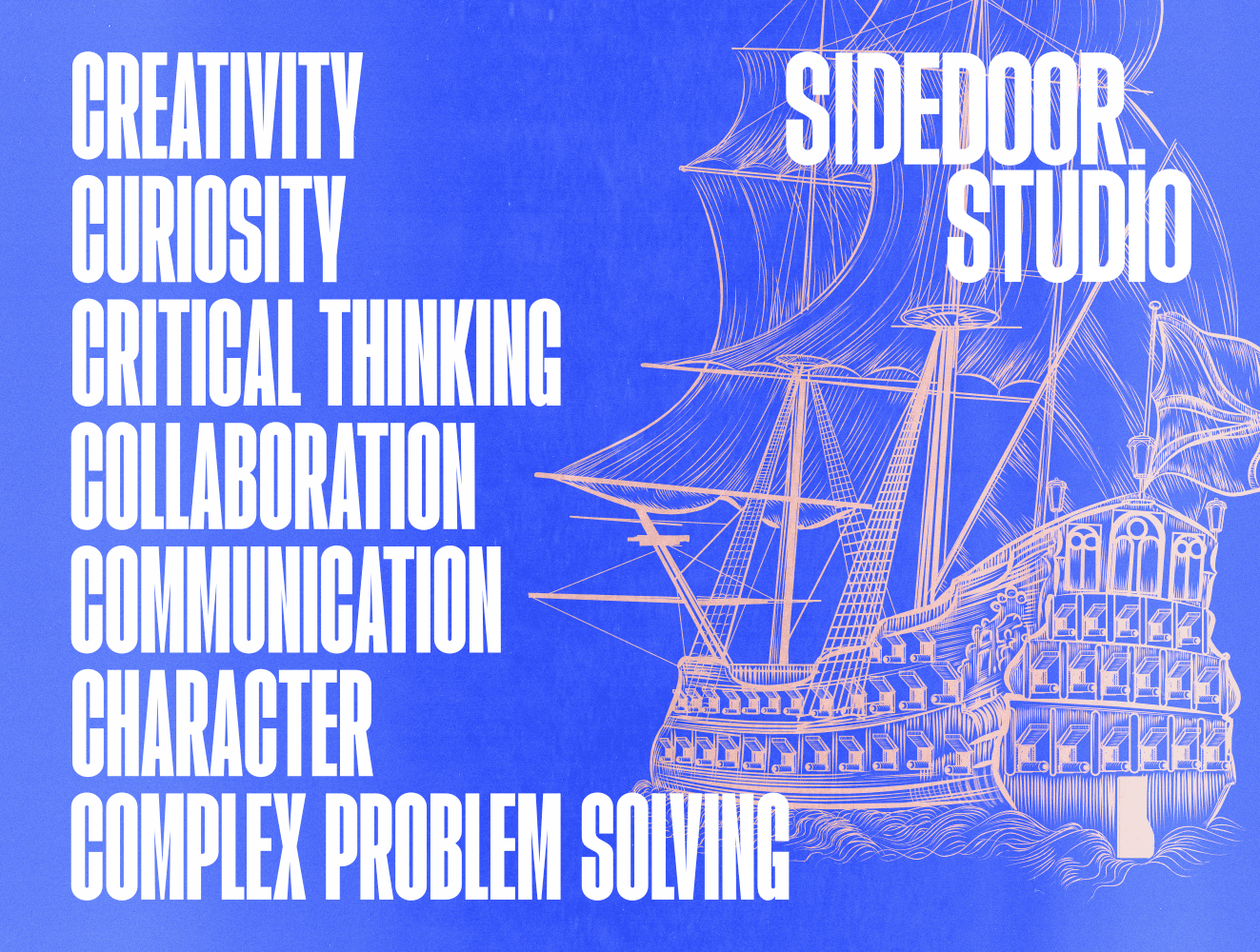
Creativity
How to have better ideas and be more innovative.
Creativity isn’t about being “artistic.”
It’s about solving problems in ways AI can’t replicate.
- The WEF lists creativity as a top 5 skill for 2025–2030.
- Companies with highly creative cultures outperform peers in revenue growth by up to 3x (McKinsey Design Index).
- 82% of leaders say creativity is the skill they most want in their teams (Adobe, State of Create).
Creativity is now a competitive advantage — personally and organisationally.
Curiosity
How to find ideas, inspiration, and insights.
Curiosity is the fuel for learning.
- Harvard research shows curiosity increases learning retention by up to 2x.
- Curious employees are 30% more engaged and significantly better at adapting to change (Gallup).
- Adolescents with higher curiosity show better wellbeing and academic performance (APA, 2022).
In a world changing at speed, curiosity isn’t cute — it’s essential.
Critical Thinking
How to question, challenge, spot patterns, and make connections.
With AI generating oceans of information, the real skill is knowing what to trust.
- Critical thinking is ranked the #1 in-demand skill worldwide by employers (LinkedIn, 2024).
- 67% of leaders say it’s the skill their teams lack most (McKinsey, 2023).
- Students trained in critical thinking improve problem-solving by up to 45% (Stanford meta-analysis).
The future belongs to thinkers, not copy-pasters.
Collaboration
How to work successfully with others.
Hybrid work didn’t remove collaboration — it made it harder.
- Highly collaborative teams are 5x more likely to perform at a high level (Institute for Corporate Productivity).
- Employees who feel part of a collaborative culture report greater job satisfaction, lower burnout, and faster learning.
- Teams with psychological safety (Google’s Project Aristotle) outperform others across almost every metric.
Collaboration is now a skill — not a default.
Communication
How to engage, influence, persuade, and motivate key audiences.
Communication is the most-requested skill by employers globally — every year, every report, every industry.
- Poor communication costs the average company £30,000+ per employee per year (HR Grapevine 2024).
- 86% of employees cite poor communication as the root cause of workplace failures (Salesforce).
- Strong communicators advance faster, negotiate better, and reduce team conflict by up to 50%.
It’s not about talking more — it’s about talking better.
Character
How to be proactive, rigorous, positive, resilient, and kind.
Character is the backbone of performance.
- Resilience training reduces burnout by 25% (NHS People Plan, 2023).
- Workers with strong self-management skills are twice as likely to be high performers (McKinsey).
- Kind leadership increases retention and engagement more than salary alone (CIPD, 2024).
Character is the human OS — without it, everything else crashes.
Complex Problem Solving
How to develop and implement practical, innovative, authentic solutions.
This is the big one.
The skill AI can support, but not replace.
- Complex problem solving has been a top 3 future skill for the last decade (WEF).
- Organisations that train people to solve problems effectively cut wasted time by up to 40% (MIT Sloan).
- Teams that use structured problem-solving approaches innovate 70% faster.
It’s not enough to spot problems — you have to fix them.
Why The 7C’s Work
We didn’t invent this out of thin air.
The 7C’s blend principles from:
- Cognitive science (e.g., metacognition, schema building, spaced learning)
- Heutagogy and self-determined learning
- Positive psychology (resilience, mindset, strengths)
- Behavioural science and habit formation
- Workplace performance research
- Creativity, innovation, and communication theory
We built them because clients told us:
“We know soft skills matter — we just don’t know how to teach them.”
So we made a framework anyone can use: HR teams, L&D managers, educators, leaders, and individuals who want to work smarter and live happier.
What Clients Say
“Si was just what we needed during our satellite data technical support team offsite. My team was super engaged because of the free writing exercises Sidedoor put together, which had a lasting impact. In our conversations for the rest of the week, the 7C's kept coming up and we could relate situations and feelings back to something Si said. As a team, using some of the language presented really helped us bond! I would recommend Sidedoor to any team that wants to build critical thinking habits.”
— Gerri Geary, Planet.com
So… will the 7C’s work for your team?
Almost certainly.
Because they’re built around how people actually learn — not how we wish they learned.
And because in a world of automation, AI, and endless change…
Human skills aren’t optional. They’re your competitive edge.
If you’d like to see how the 7C’s could transform your team, culture, or organisation:
👉 Drop us a message.
Let’s set sail together.